Apr 06, 2026

Stop LeetCoding. AI lets you build what used to take a whole team.

AI killed LeetCode's signal and handed you a 10x building multiplier. One person can now ship what took a team of five. Use that instead.


AI can one-shot any LeetCode problem you’ve spent three hours staring at. That same AI can also help you build, ship, and distribute an entire product in a weekend. One of these paths ends with a slightly higher interview score. The other might end with revenue, users, and a career trajectory you never planned for.

Most people are still grinding. The smart ones are building.

The LeetCode hustle was always broken

Let’s be honest about what LeetCode actually is: a scaling hack for big tech hiring pipelines.

Google gets 3 million applications a year. They needed a standardized, repeatable way to extract signal from a firehose of candidates. LeetCode-style interviews were the answer - not because they’re good at identifying talent, but because they’re cheap to administer at scale. One rubric, one scoring system, thousands of interviewers, millions of candidates. Assembly line hiring.

That’s it. That’s the whole reason. It was never about finding the best engineers. It was about processing the most engineers with the least overhead.

You memorize patterns. You grind 500 problems. You pray that the interviewer picks one of the 12 variations you’ve seen before. Then you get the job and never touch a linked list reversal again for the rest of your career.

This was lazy hiring dressed up as meritocracy. And lazy systems get killed first when better tools show up.

Now? It’s not just broken. It’s obsolete.

AI didn’t kill LeetCode - it just exposed the laziness

Claude, GPT, Copilot - pick your weapon. Any of them can solve a medium-difficulty LeetCode problem in seconds. Hard problems? Give it a minute. The thing you spent six months grinding can now be done by a tool that costs less than your Netflix subscription.

The move-fast teams already figured this out. Startups and lean engineering orgs are shifting to system design discussions, take-home projects, and pair programming sessions. They care about whether you can architect a system, reason about trade-offs, and ship. Not whether you memorized the optimal solution to “trapping rain water.”

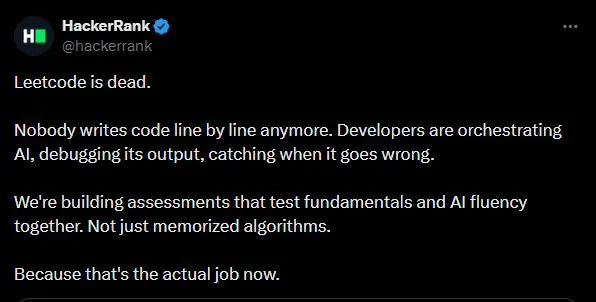
Big tech will be the last to adapt, because big tech is allergic to changing processes that “work at scale.” But the signal they built their entire pipeline around just got commoditized by AI overnight. Their standardized, scalable, lazy hiring filter now produces zero useful information. Any candidate can have an AI solve the screen for them. Any AI can ace the on-site.

And their brilliant solution to AI cheating? Require in-person interviews. Fly candidates across the country so they can watch you scribble on a whiteboard in real time. That’s not adapting - that’s doubling down on a broken system and adding a plane ticket. Instead of rethinking what they’re actually testing for, they just made the same useless process more expensive and more inconvenient for everyone involved. Peak big tech logic: the test doesn’t work anymore, so let’s make it harder to cheat on the test that doesn’t work.

Here’s what nobody wants to say out loud: if your entire hiring signal can be replicated by an AI in 30 seconds, that signal was never measuring what you thought it was measuring. And the companies still clinging to it are telling you everything you need to know about how they make decisions.

”But LeetCode gets you hired”

Does it though?

Let’s do the math on this job market. You grind LeetCode for 6 months. You apply to 200 companies. You get maybe 10 interviews. You bomb 6 of them because the interviewer picked a problem outside your memorized set. You pass 4 but get ghosted on 2 because they filled the role internally. You get 2 offers and pick one.

Six months of your life for an outcome that had about 47 other variables you couldn’t control: market conditions, headcount freezes, hiring manager vibes, whether the recruiter had a bad morning, visa sponsorship policies, team budget cuts mid-interview-loop.

LeetCode was never the bottleneck. The market is the bottleneck. Your network is the bottleneck. Luck is the bottleneck. You just convinced yourself that the one variable you could control (grinding problems) was the one that mattered most. It wasn’t.

Side projects have the same downside but unlimited upside

Here’s the thing people miss when comparing LeetCode grinding to building side projects: they both have the same worst-case scenario. You spend months on something and it doesn’t directly land you a job.

But the best-case scenarios? Not even in the same universe.

LeetCode best case: You get hired at a company that values algorithm trivia. Congratulations, you’re now in an environment that optimizes for the wrong things.

Side project best case: Pick literally any of these:

  • You build something people actually use and it generates revenue
  • You scratch your own itch and solve a problem that’s been annoying you for years
  • You learn a new tech stack by actually building with it, not by reading docs
  • Your project goes viral on Hacker News and your DMs explode with opportunities
  • A hiring manager sees your GitHub and skips the technical interview entirely
  • You accidentally build a business

The asymmetry here is insane. LeetCode has a hard ceiling. Side projects have no ceiling at all.

AI turned solo builders into small armies

This is the part that changes everything, and most people haven’t internalized it yet.

Two years ago, building a real product as a solo developer meant months of grinding through boilerplate, fighting frameworks you barely knew, and shipping something half-baked because you ran out of energy before you ran out of ideas. You needed a backend person, a frontend person, a designer, someone who understood DevOps. A real product was a team effort.

Now? You and an AI can do a ridiculous amount of that work in a fraction of the time.

Need a landing page? Built in an hour. Need a REST API with auth? Afternoon project. Need to pivot your entire frontend framework because users hate the UX? Do it over the weekend. The iteration speed is insane. You can try five ideas in the time it used to take to validate one.

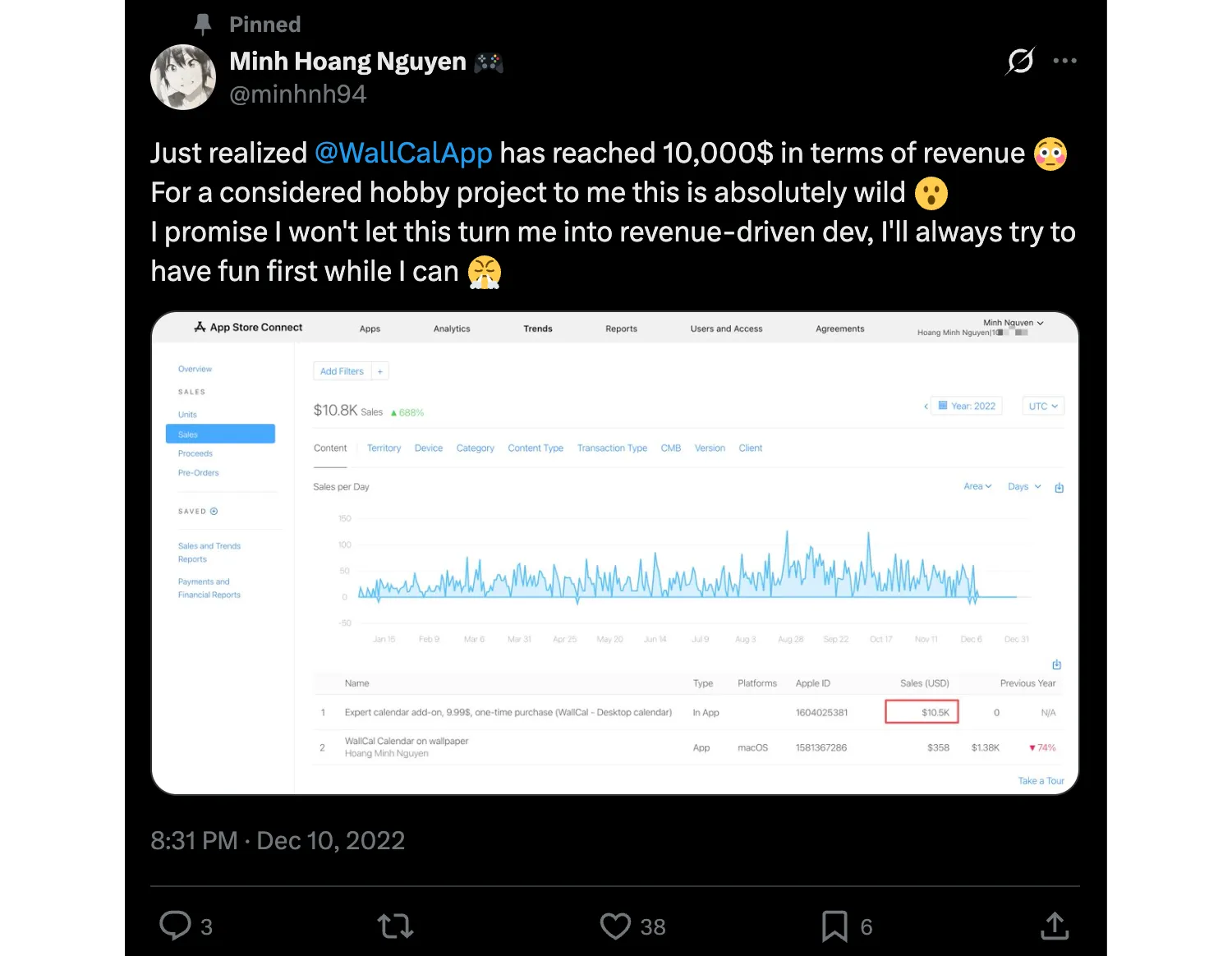
This isn’t hypothetical. Solo developers are shipping real SaaS products, real tools, real apps that make real money. Not because they suddenly got 10x smarter, but because AI collapsed the cost of building from “needs a team and six months” to “needs one person and a few weekends.”

The old excuse was “I’m just one person, I can’t build something serious.” That excuse is dead. You can now:

  • Spin up a full-stack app in a day
  • Generate, test, and iterate on features faster than most teams can hold a planning meeting
  • Handle the boring parts (docs, tests, deployment configs) without losing momentum
  • Distribute through Product Hunt, Hacker News, Twitter, and indie communities with zero marketing budget

The barrier to building something people actually want has never been lower. And instead of using this superpower to create things, people are using AI to… solve LeetCode problems faster. The irony is painful.

You actually learn when you build

Here’s a dirty secret about LeetCode: it teaches you almost nothing about software engineering.

You know what building a real project teaches you?

  • How to design systems that don’t fall over at scale
  • How to make trade-offs between consistency and availability
  • How to debug production issues at 2am when the logs are useless
  • How to ship something imperfect and iterate
  • How to deal with real databases, real APIs, real users who do insane things
  • How to make architectural decisions that you’ll live with for years

These are the skills that actually matter in the job. These are the skills that make you senior. And you can’t get any of them from reversing a binary tree.

System design interviews are eating the technical interview space for a reason. Companies are slowly realizing that they’d rather hire someone who’s built and shipped real things than someone who memorized the top 100 LeetCode patterns.

The enjoyment factor nobody talks about

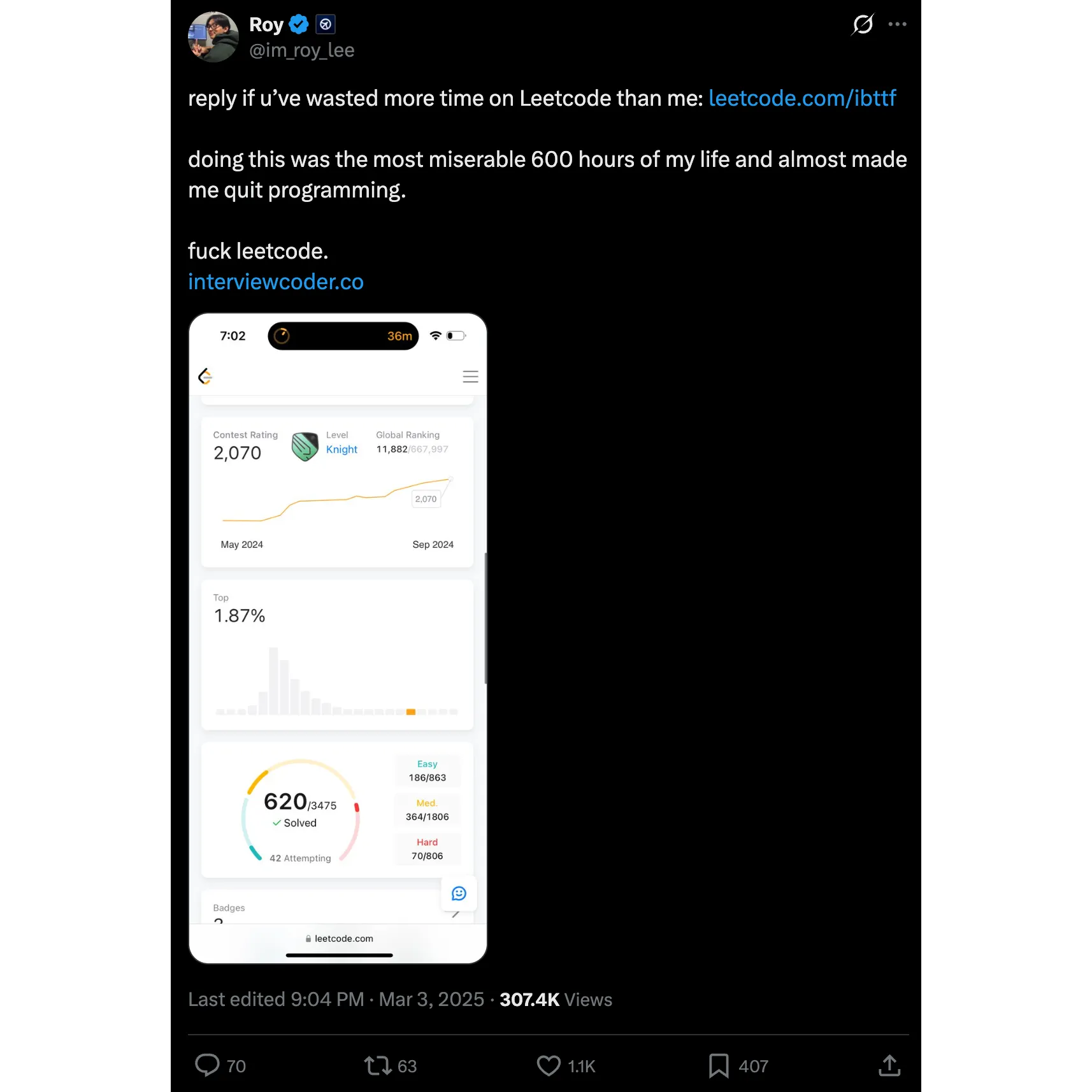
Grinding LeetCode sucks. I’m not being dramatic - it genuinely sucks. It’s repetitive, soul-crushing, and the dopamine hit from solving a hard problem evaporates the moment you realize there are 2,000 more where that came from.

Building something you care about? That’s a completely different energy.

You wake up excited to work on it. You think about the architecture in the shower. You stay up late not because you have to, but because you’re in flow and the feature is almost done. You show it to friends and they actually use it.

This matters more than people admit. Sustained motivation beats forced discipline every single time. The person who spends 6 months building something they love will learn more and produce better work than the person who white-knuckles through 500 LeetCode problems while hating every minute of it.

”But I need to pass interviews”

Fair point. Some companies still gate on LeetCode-style questions.

Here’s the move: spend 10-15% of your prep time on algorithms. Enough to not embarrass yourself. Use AI to help you understand the patterns quickly instead of grinding each problem manually.

Spend the other 85% building something real. When you walk into that interview with a side project you’re genuinely passionate about - one you can talk about the architecture of, the trade-offs you made, the scaling challenges you hit - you become a fundamentally different candidate.

You’re not “person #347 who can implement BFS.” You’re “the person who built that thing.” Interviewers remember that. Hiring managers remember that.

The windfall you can’t predict

The most compelling argument for side projects is the one you can’t plan for: unexpected outcomes.

Every successful indie project started as someone scratching their own itch. Notion started as a side project. Discord was a pivot from a failed game. Craigslist was literally just Craig’s list of local events.

You’re probably not going to build the next Notion. But you might build something that gets 100 users. Or gets featured in a newsletter. Or catches the eye of someone who offers you a job, an investment, or a partnership you never saw coming.

You can’t predict which side project leads to a windfall. But you can guarantee that LeetCode problem #487 won’t.

What to do right now

Stop grinding. Seriously. Close the LeetCode tab.

Pick a problem that annoys you personally. Something in your daily life that’s broken, inefficient, or missing a good solution. Build the thing that fixes it.

Ship it ugly. Put it on GitHub. Tell people about it. Iterate when users complain.

That’s the whole strategy. It’s not more complicated than that.

The market is unpredictable. Your network is unpredictable. Whether a hiring manager likes you is unpredictable. But what you build - that’s yours. Nobody can take it away, no market downturn can erase it, and the skills you gain from building it transfer to everything else you’ll ever do.

LeetCode was a means to an end, and the end was always “prove you can build shit.” Skip the middleman. Just build the shit.